- Official name: Topkapi Palace Museum (Topkapı Sarayı Müzesi)
- Location: Cankurtaran, Fatih, Istanbul
- Category: Imperial palace complex and museum
- Founded: c. 1460s; substantially completed in 1478
- Expanded: 15th–19th centuries
- Layout: 4 main courtyards, the Harem, service buildings, kiosks, and terrace gardens
- Main styles: Ottoman, Islamic, Byzantine-influenced, and Anatolian court architecture
- Key patrons/designers: Mehmed II, later Ottoman sultans, and imperial architects including Mimar Sinan
- Headline fact: Seat of Ottoman rule for nearly 400 years, within Istanbul’s UNESCO-listed historic core
Topkapi Palace architecture: Ottoman courtyards, tiled pavilions, and imperial spatial design
Few palace complexes explain Ottoman power as clearly as Topkapi Palace. Spread across gardens, gates, kiosks, and private apartments above the Bosphorus, it feels less like a single building and more like a carefully staged city of ceremony. Commissioned by Mehmed II after the Ottoman conquest of Constantinople and expanded by generations of sultans and court architects, the palace favors layered courtyards, low domes, tiled interiors, and controlled views over monumental symmetry. That is what makes it so distinctive in Istanbul: authority here is expressed through sequence, privacy, and detail. Once you know how to read the plan, every gate and chamber becomes more meaningful.
Topkapi Palace architecture page guide
FAQs
Quick overview of the architecture of Topkapi Palace
Architectural style(s) & influences
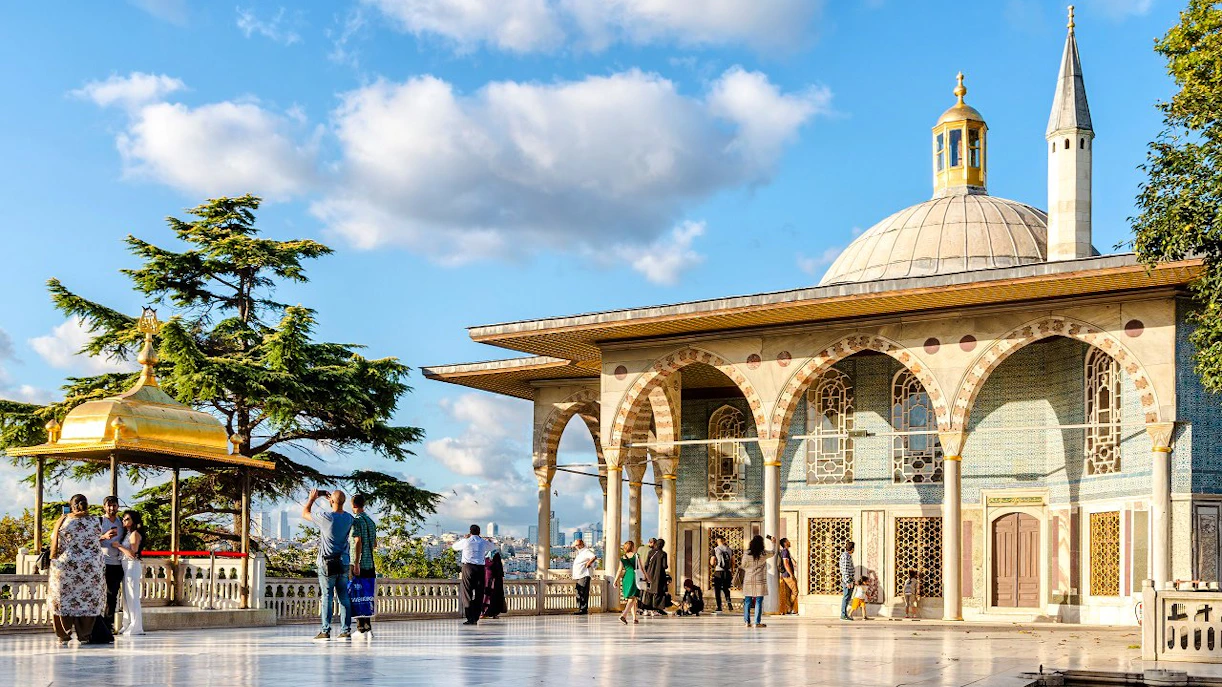
Topkapi Palace is primarily Ottoman in style, meaning it favors pavilions, courtyards, domed chambers, gardens, and carefully layered access rather than one giant ceremonial block. Islamic design appears in its geometric order, calligraphy, tiled surfaces, fountains, and emphasis on privacy. Byzantine influence is visible less in decoration than in setting and continuity: the palace rises on the old acropolis of Constantinople, and nearby Hagia Irene remained within its outer grounds. Anatolian court traditions appear in the use of timber, tiled revetments, projecting eaves, and inward-looking residential spaces.
Unlike Dolmabahçe Palace, which presents a later 19th-century European-facing facade, Topkapi stays low, dispersed, and strategic. You notice this best as you pass from open courts into increasingly intimate spaces, where power is revealed through thresholds, not sheer scale.
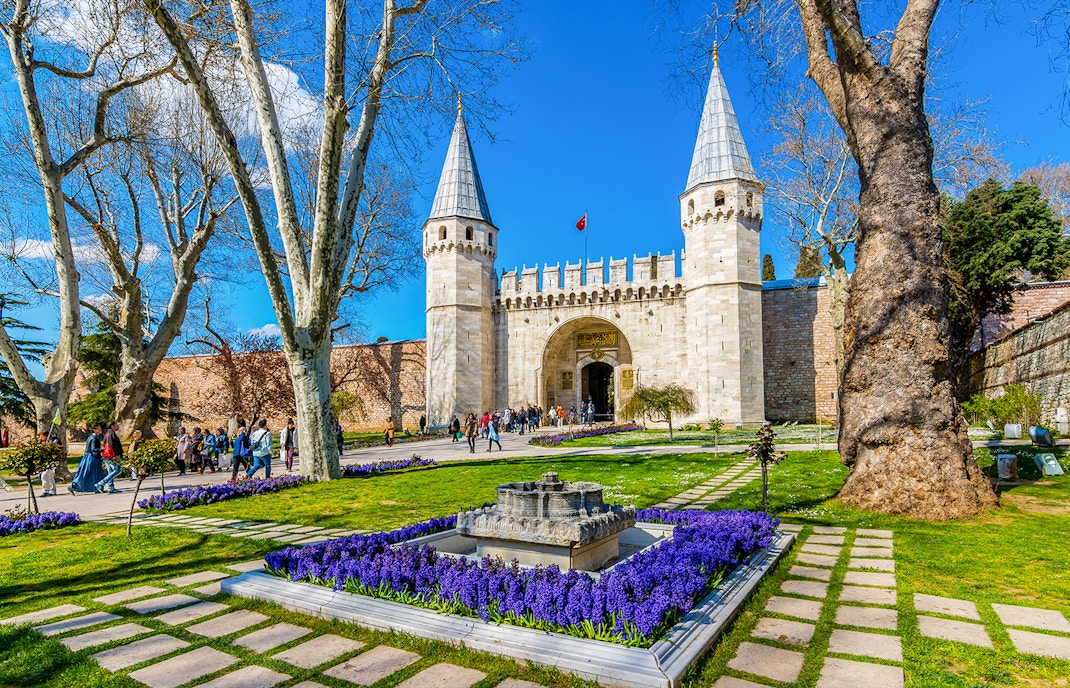
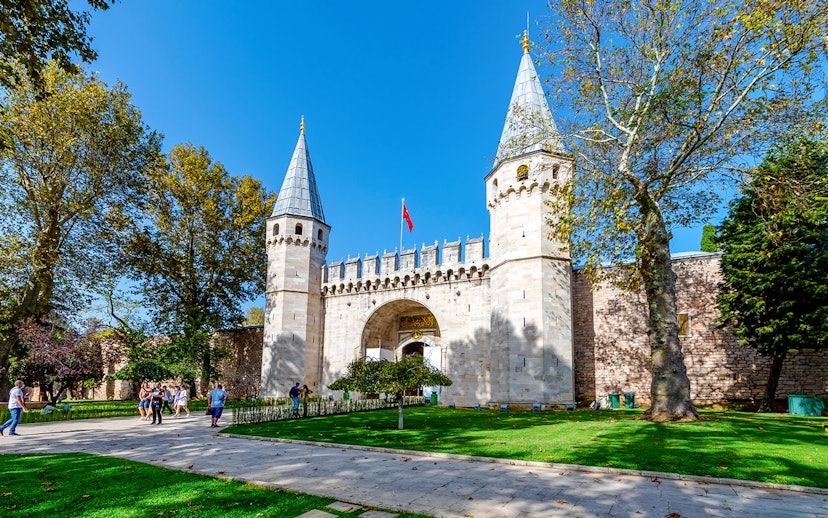
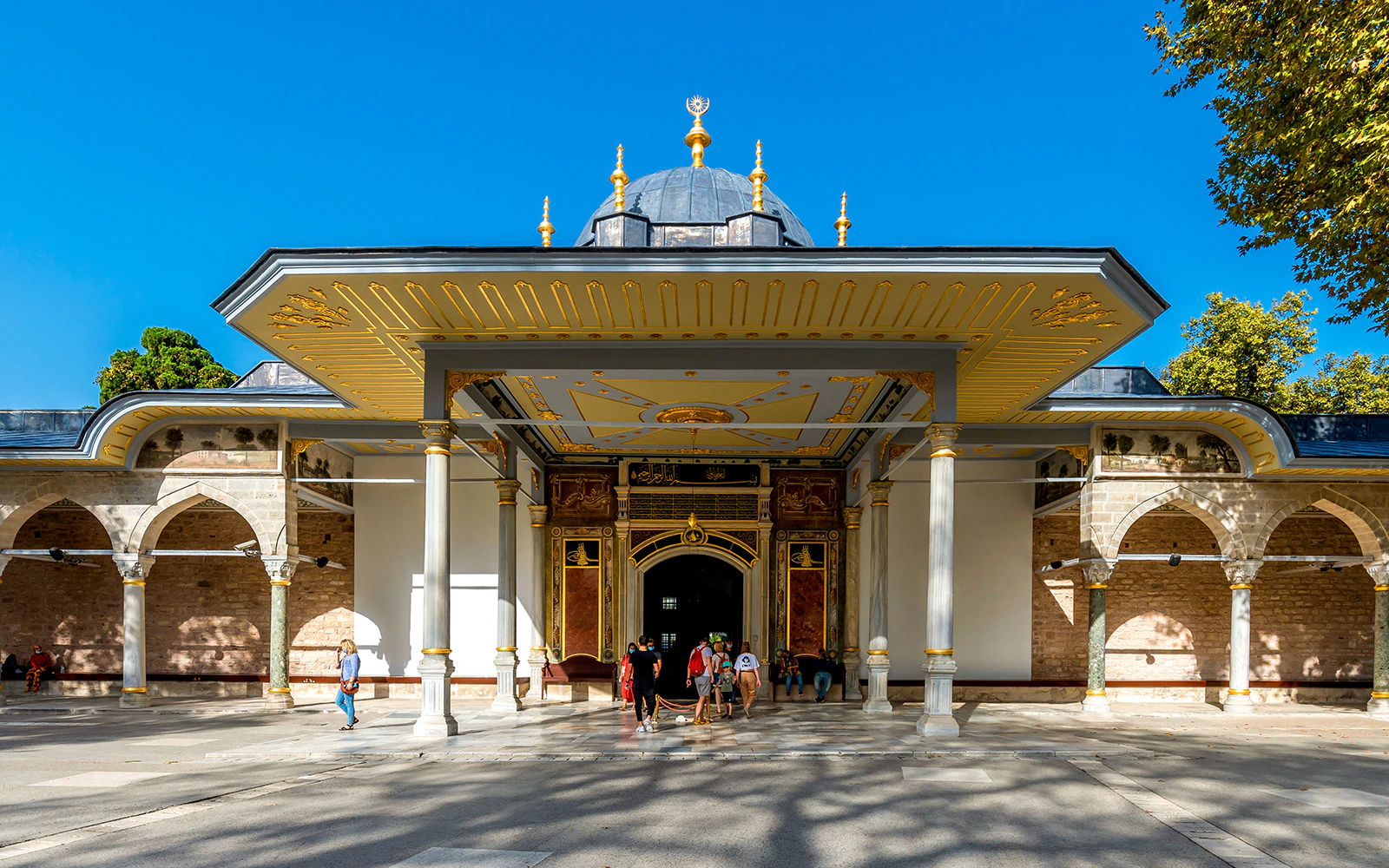
Gate of Salutation
Twin pointed towers and a fortified gateway announce the shift from public grounds to the working court.
.jpg?auto=compress%2Cformat&w=1069.6000000000001&h=687.6&q=90&ar=14%3A9&crop=faces&fit=crop)
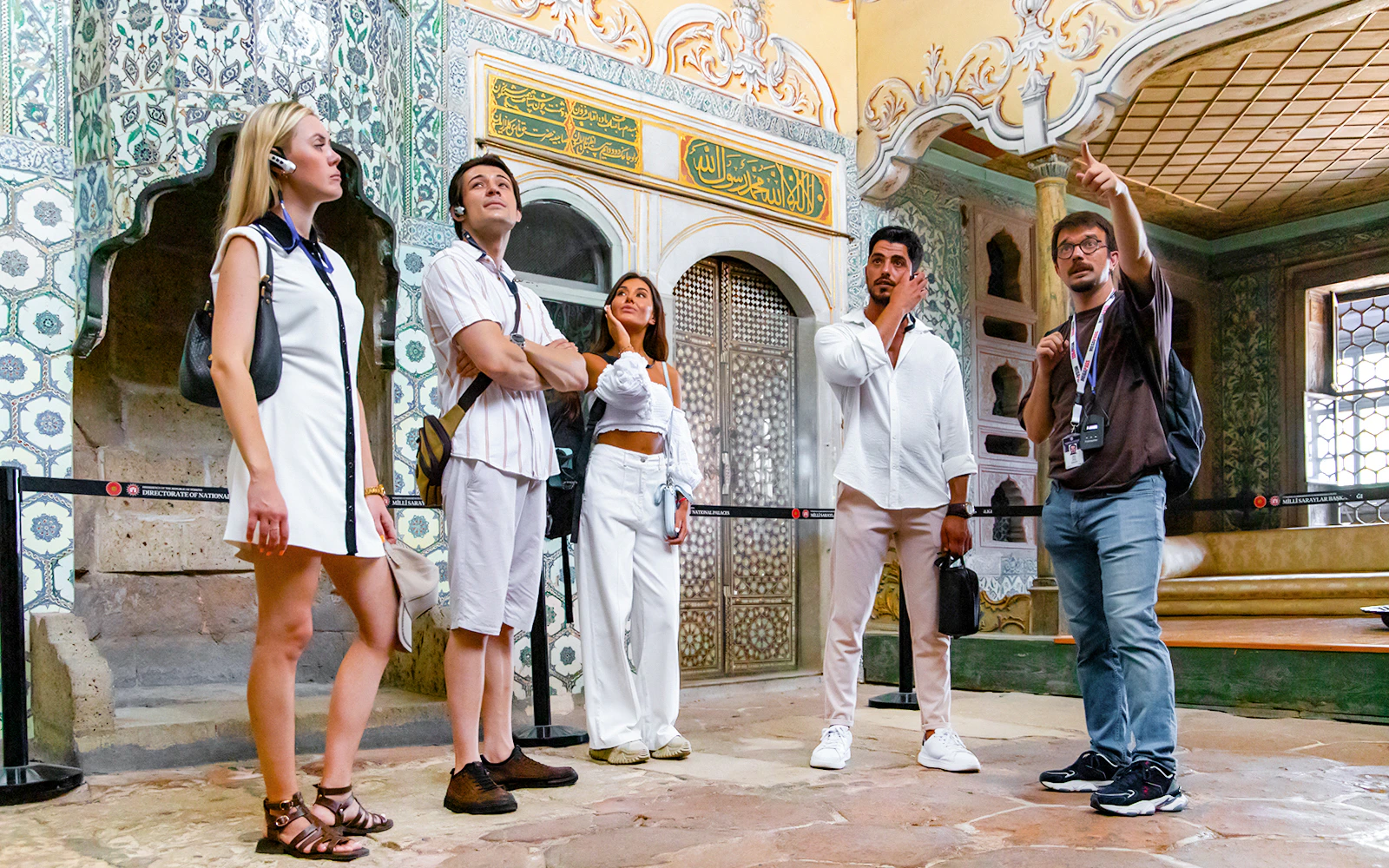
Harem tile detail
Dense Iznik tile panels, carved wood, and inscribed friezes show how ornament turns private rooms into political theater.
Architectural highlights of Topkapi Palace
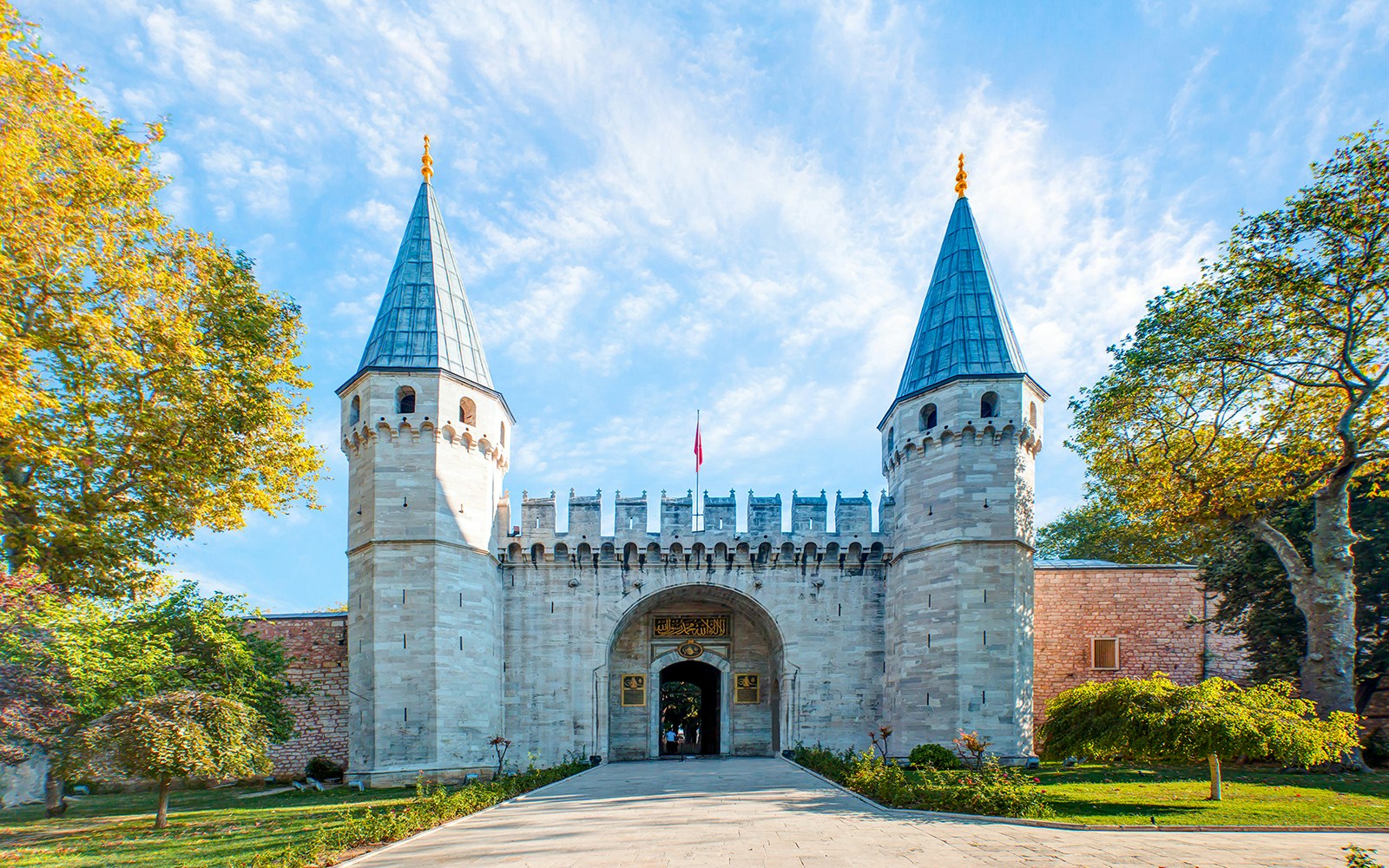
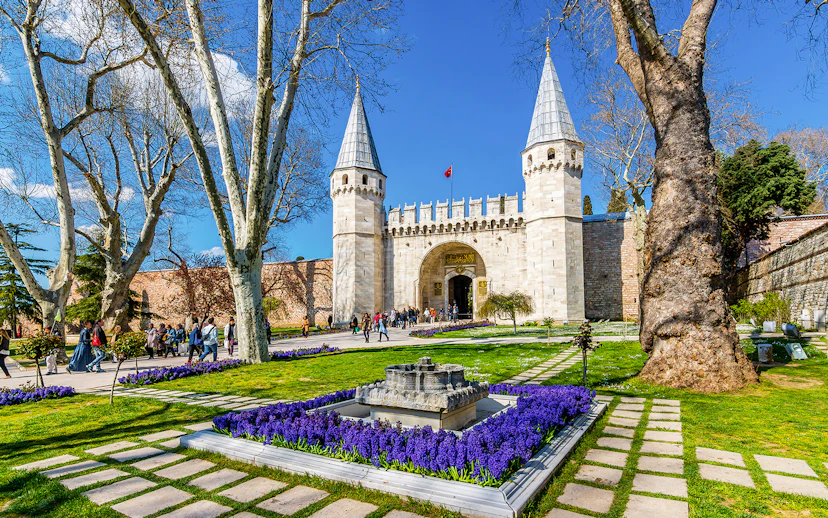
Gate of Salutation
Its twin towers create one of the palace’s most recognizable silhouettes, framing the passage into the administrative heart of the complex with a military, almost castle-like authority.
Who built it?
Mehmed II
As patron, Mehmed II commissioned the palace soon after 1453 and established its essential logic: a sequence of increasingly private courts that mirrored Ottoman authority and court protocol.
Mimar Sinan
The 16th-century chief imperial architect influenced later repairs, rebuilding, and additions within the palace complex, helping shape parts of the service and residential fabric during Topkapi’s most powerful era.
Court architects across centuries
Topkapi was not the work of a single master planner. It grew through additions by successive sultans and imperial architects, which is why the complex feels layered, varied, and historically legible.
History of the architecture
Mehmed II’s foundation
After the Ottoman conquest of Constantinople, Mehmed II commissioned a new imperial residence on the city’s historic promontory. By the late 15th century, the first major courts, walls, and service structures were in place, establishing the palace as both a home and a seat of government.
Expansion under the classical Ottoman court
During the 16th century, especially under Suleiman the Magnificent and his successors, the complex expanded in function and refinement. The Harem grew in importance, ceremonial rooms were rebuilt or embellished, and decorative programs in tile, wood, and calligraphy became more sophisticated. Fires and practical court needs also prompted periodic redesign.
Later pavilions and changing tastes
From the 17th to the 19th centuries, sultans continued adding kiosks, terraces, and pleasure pavilions, particularly in the upper courts. These later layers did not erase the original plan; instead, they enriched it, giving the palace its unusual mix of administrative severity and garden elegance.
Museum era and conservation
Once the Ottoman court shifted to newer palaces such as Dolmabahçe, Topkapi gradually became a museum complex. Modern conservation has focused on stabilizing timber, tiles, masonry, and painted surfaces, while some rooms may close temporarily for restoration or visitor management.
The exterior of Topkapi Palace
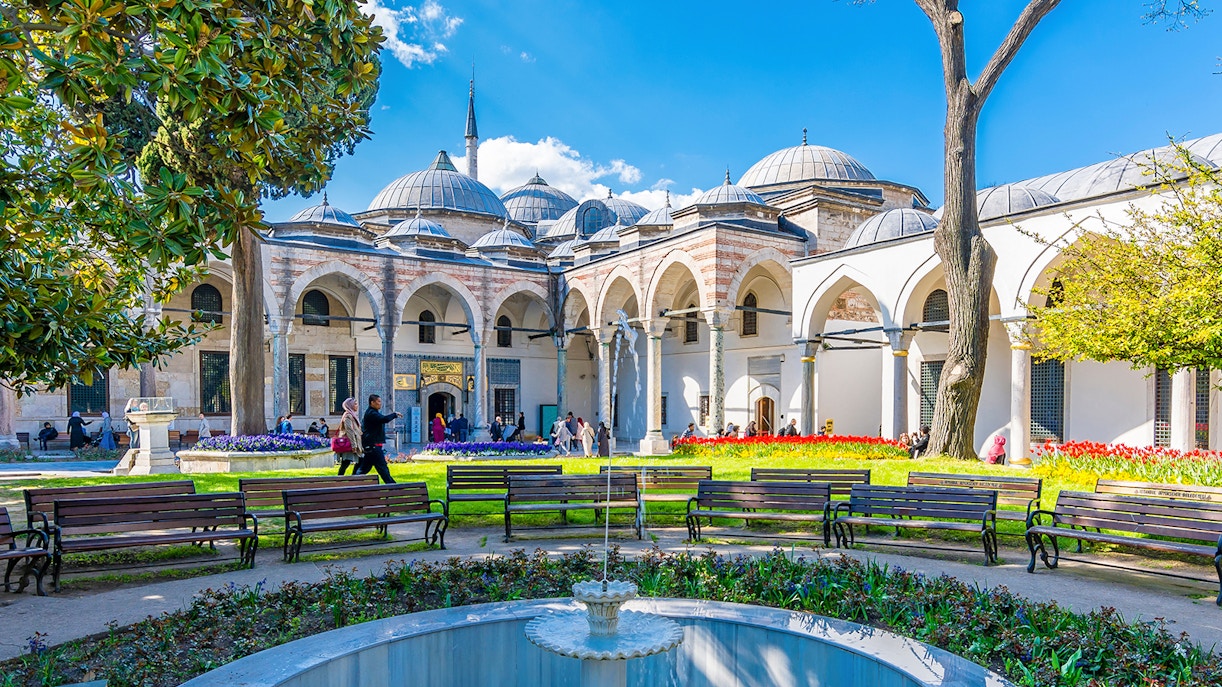
From the outside, Topkapi Palace does not announce itself as a single overwhelming monument. What you first see is a fortified edge — high walls, gates, trees, and layered roofs spread across the old headland above the Bosphorus. Entering through the Imperial Gate, the palace begins as landscape rather than facade, with the broad First Courtyard softening the transition from city streets to imperial enclosure.
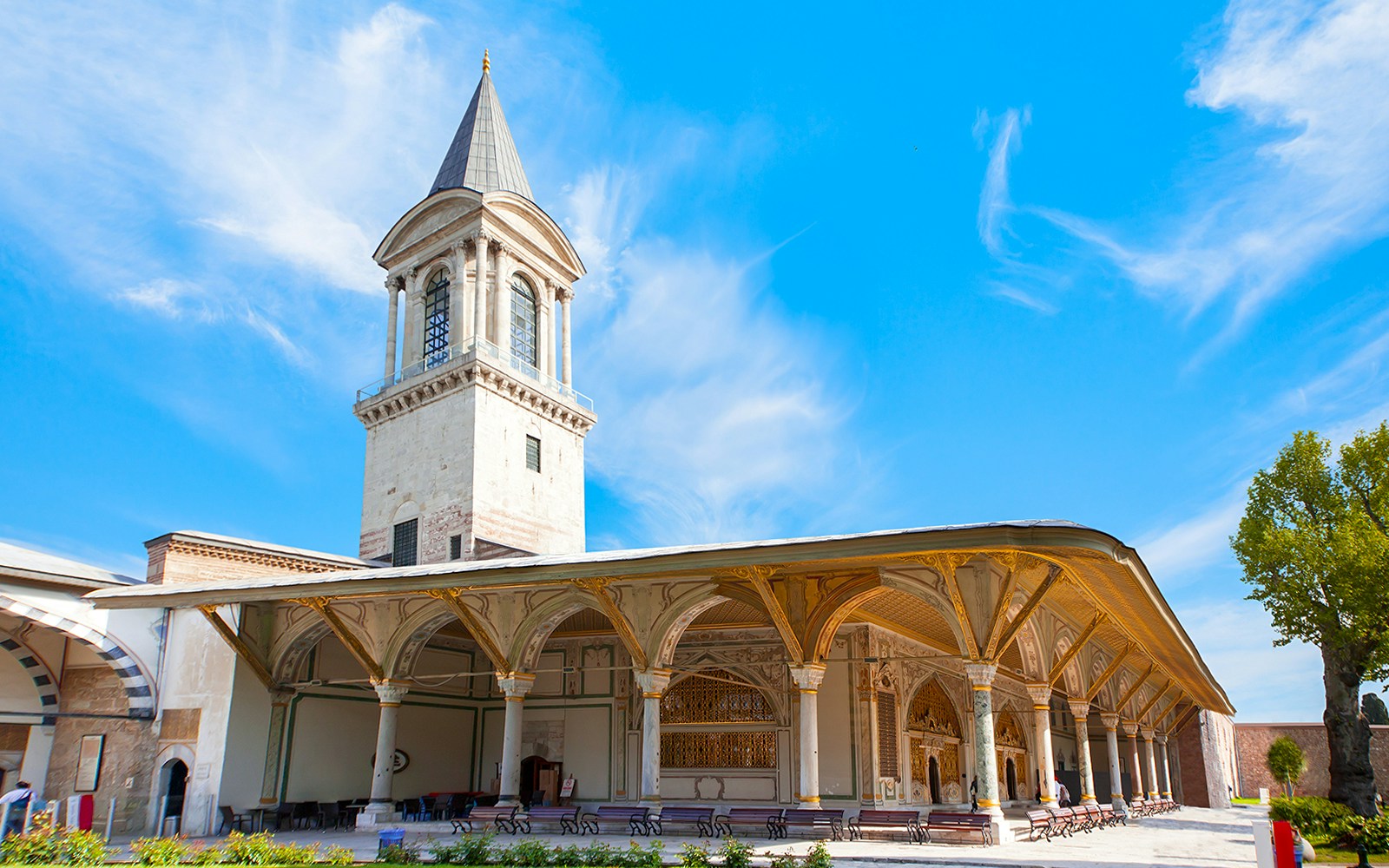
As you move closer, the architecture becomes more legible. The Gate of Salutation, with its pointed towers, provides the strongest formal image, while behind it the complex breaks into domed halls, long kitchen chimneys, shaded porticoes, and low pavilions rather than one symmetrical frontage. Stone, plaster, lead-covered roofs, timber elements, and tiled surfaces all contribute to a textured, accumulated appearance. Fires, earthquakes, weathering, and repeated restorations have left subtle differences in surface and finish, so the exterior reads as a living record of repair as much as design. On arrival, the palace feels less like a showcase facade and more like an empire unfolding behind walls.
The interior of Topkapi Palace
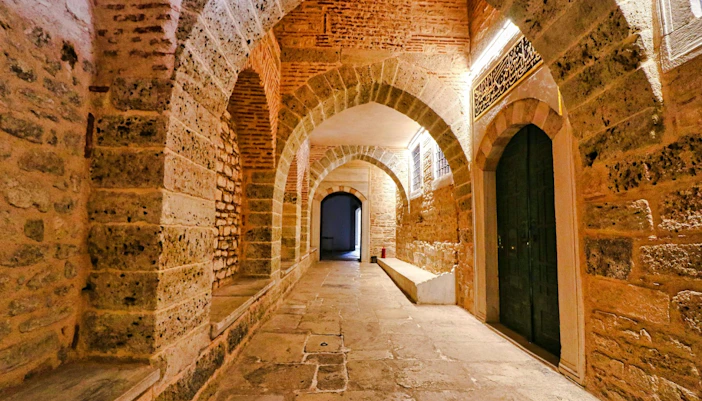
Ceremonial and administrative zones
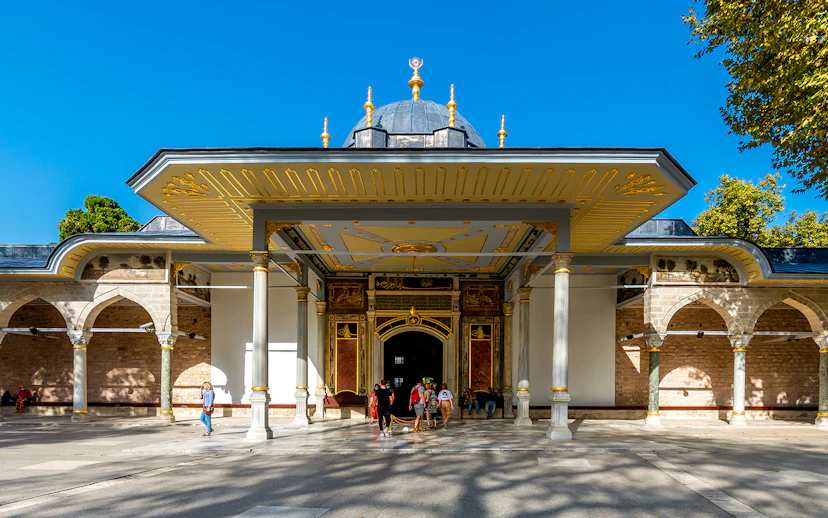
Inside, the palace is organized by rank and access. The Second Courtyard opens into the working machinery of empire — kitchens, council spaces, and service routes — while the Third Courtyard becomes quieter, more symbolic, and more tightly controlled. This is where architecture shifts from broad movement to concentrated display, with domed chambers, treasury rooms, and sacred spaces arranged for ritual, waiting, and audience.
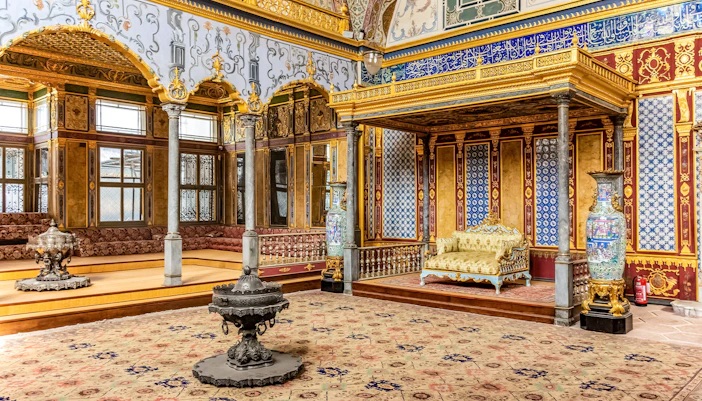
The Harem
The Harem is the palace’s most intricate interior zone. Its narrow passages, layered rooms, grilled openings, and dense tilework create a very different atmosphere from the open courts outside. Instead of grandeur through scale, it delivers grandeur through finish: Iznik tiles, painted vaults, carved wood, marble details, and carefully managed light.
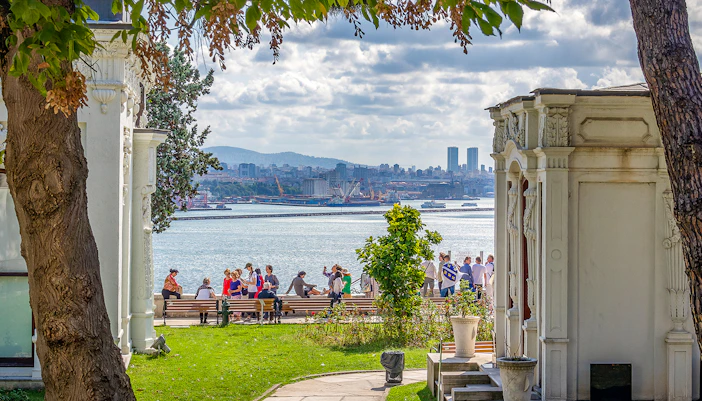
Pavilions and outlooks
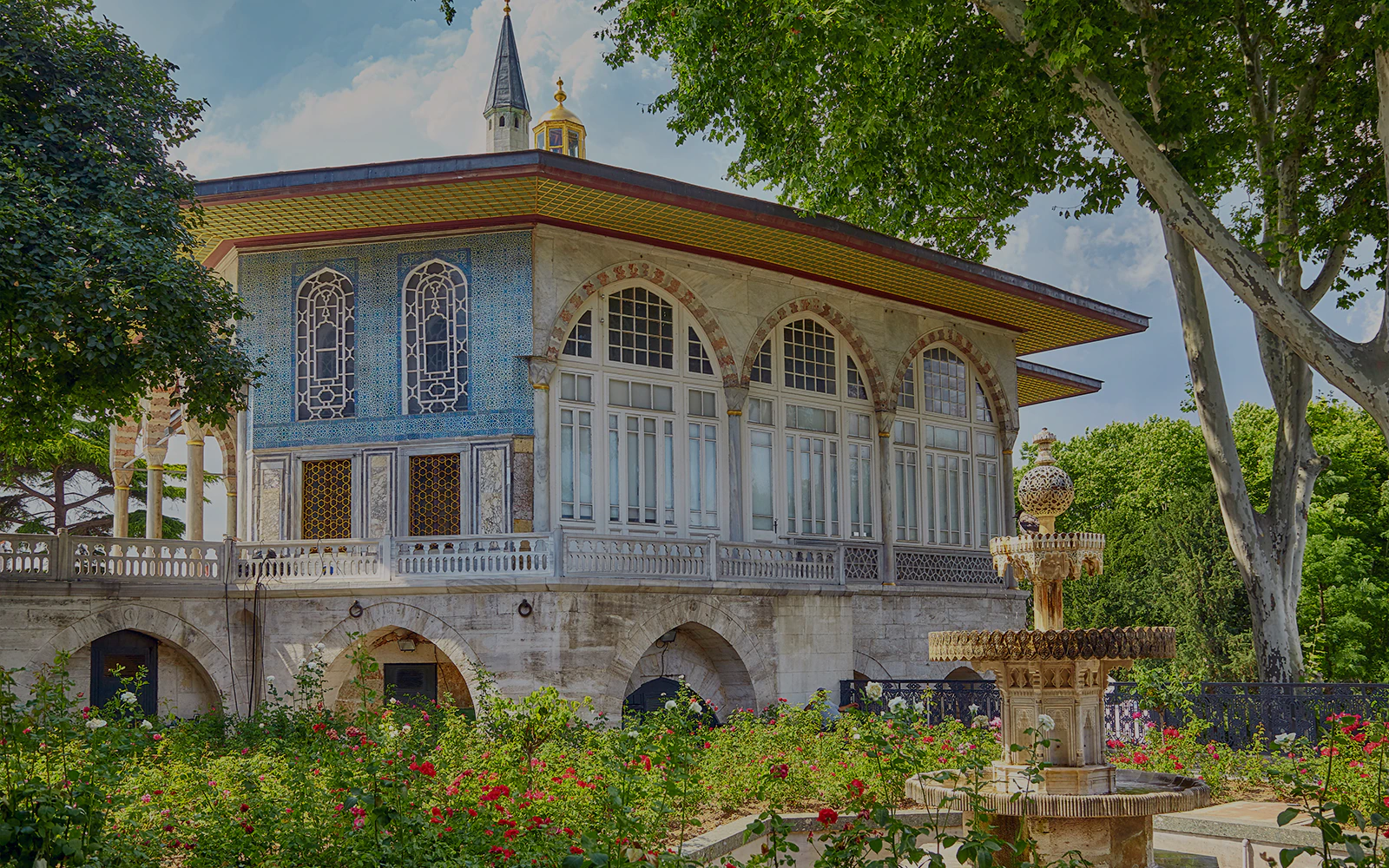
In the upper courts, interiors open again toward air and view. The kiosks and terrace rooms feel lighter, more reflective, and more seasonal, pairing crafted surfaces with sea-facing windows and garden settings.
Frequently asked questions about Topkapi Palace’s architecture
The palace is defined by its 4-courtyard layout, pavilion-based planning, domed halls, fortified gates, tiled interiors, and Bosphorus-facing terraces. Unlike a single monumental palace block, it works as a layered complex where power is expressed through sequence, privacy, and controlled access.
It began in the 15th century under Mehmed II, then expanded across 4 centuries as different sultans added halls, Harem apartments, kiosks, and garden pavilions. Fires, repairs, and changing court rituals shaped the layout, so the complex reads as a series of historical layers rather than one unified campaign.
Prioritize the Gate of Salutation, the Imperial Council area, the Harem, the Third Courtyard, and the Baghdad Kiosk. Together they show the full range of Topkapi’s architecture — military, ceremonial, residential, decorative, and scenic.
The deeper you move into the palace, the more restricted and symbolically charged the spaces become. Public and service areas lie closer to the entrance, while the sultan’s ceremonial and private domains sit farther inside, turning architecture into a tool of protocol and controlled access.
Topkapi is earlier and more distinctly Ottoman than Dolmabahçe Palace, which reflects heavier European influence and a more unified 19th-century grandeur. It also differs from imperial mosques such as the Blue Mosque or Hagia Sophia, where one vast worship space dominates instead of a sequence of courts and residences.
Follow an ‘architect’s eye’ route: Gate of Salutation, Second Courtyard, Harem, Third Courtyard, then the upper kiosks and terraces. For structured context, self-paced options such as Topkapi Palace Skip-the-Line Tickets with Audio Guide or guided choices such as Topkapi Palace & Harem Guided Tour with Skip-the-Line Tickets can help you interpret what you’re seeing.
Yes. Some rooms may close temporarily for conservation, and uneven paving, steps, and narrow passages can limit access in parts of the complex. Opening patterns can also change; Topkapi Palace is commonly closed on Tuesdays, so check current schedules before visiting.