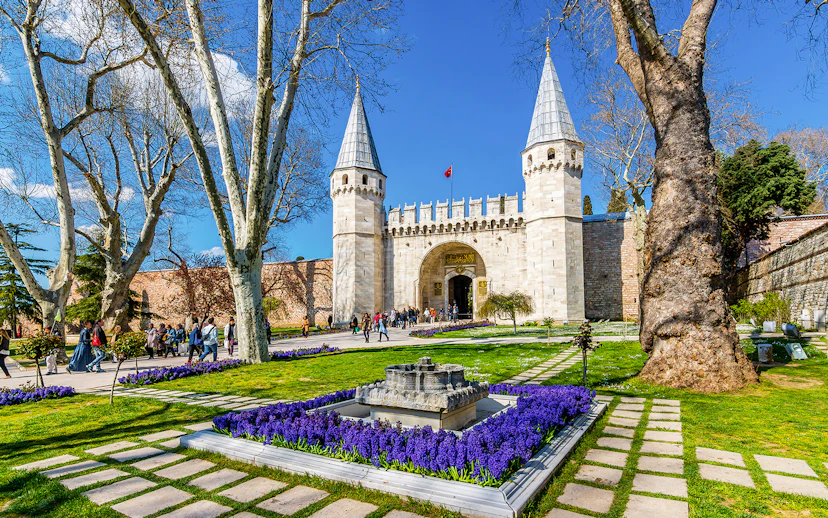

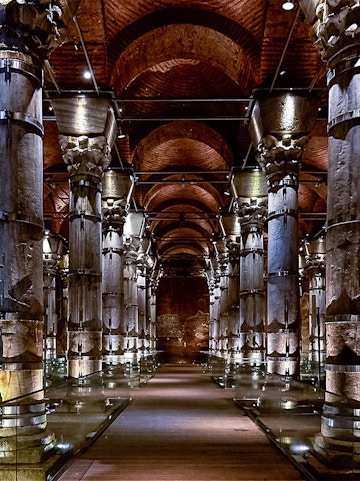
Topkapi Palace

Topkapi Palace Kitchens Tickets

Included with Topkapi Palace tickets

Timings

RECOMMENDED DURATION

3 hours
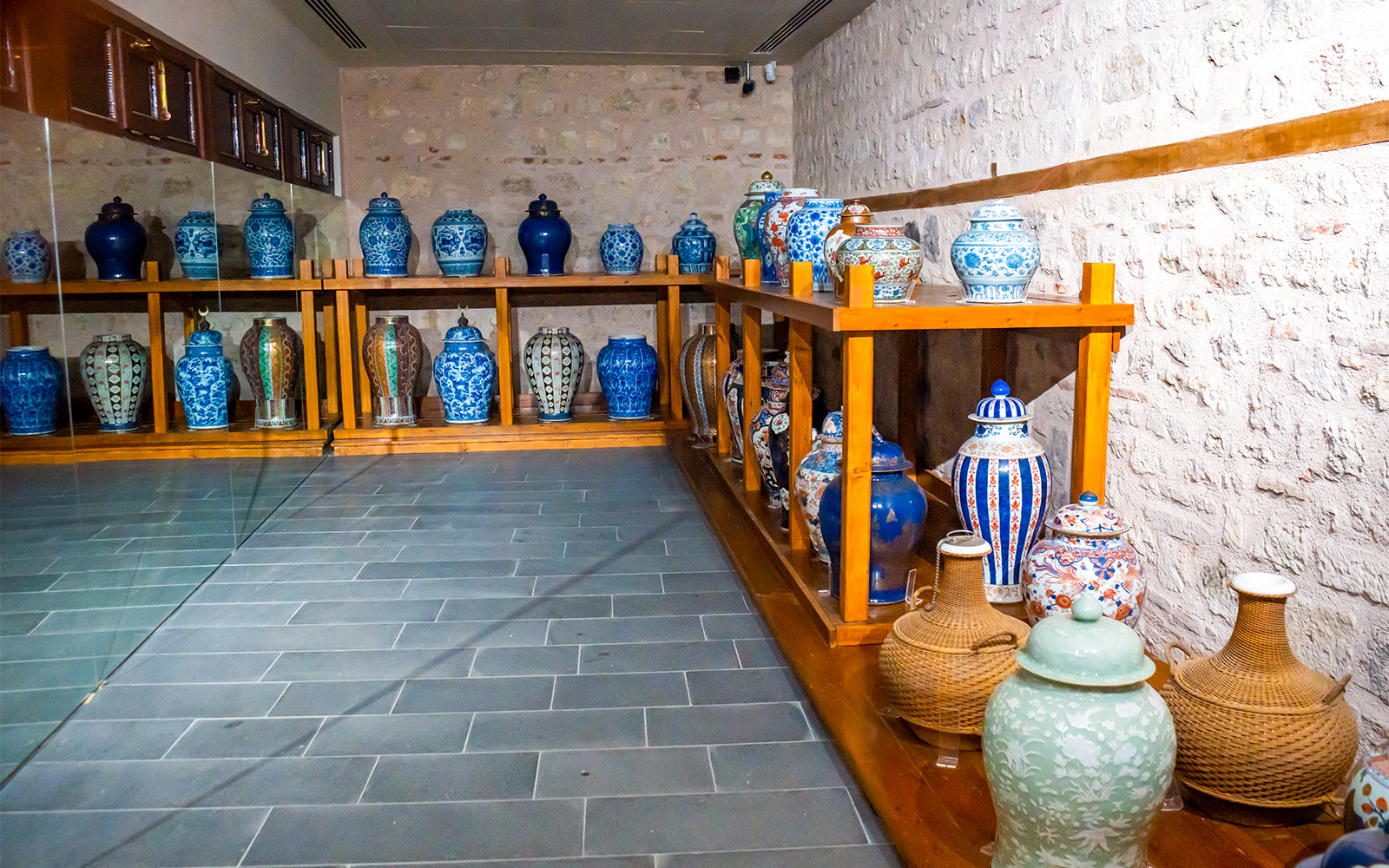
Topkapi Palace kitchen with shelves of blue and white porcelain utensils.

Top things to do in Istanbul

Quick overview
Separate ticket: Not required
When you'll see it: Early in the visit, along the right side of the Second Courtyard
Visit duration: 20–30 mins self-guided/30–40 mins with guide or audio guide
Best time: Within the first 30–45 minutes after clearing security (before 10:30am)
Restrictions: Photo status to be verified on-site; complex closed on Tuesdays

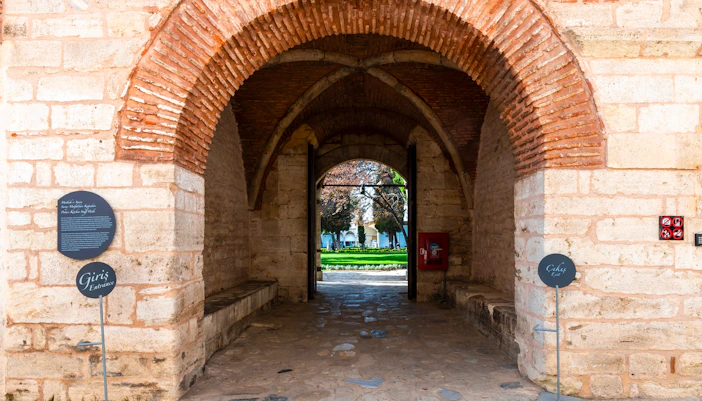
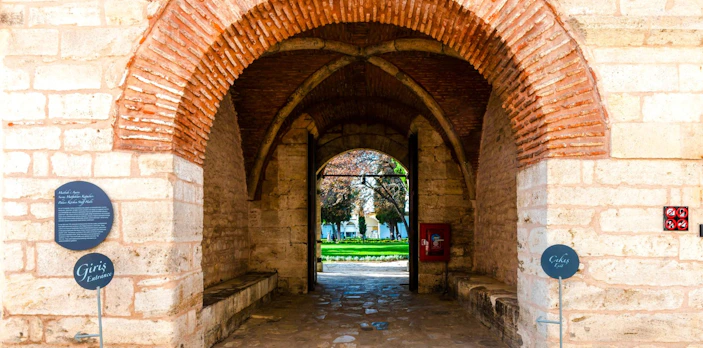
Entrance to Topkapi Palace Kitchens with arched stone passageway, Istanbul.

The Topkapi Palace Kitchens are included with all Topkapi Palace tickets. No separate ticket is needed. You’ll reach them early in the visit, along the right side of the Second Courtyard after security and ticket control. Choose a guided tour or an audio guide ticket if you want the court stories behind the chimneys, copper cauldrons, porcelain, and service rooms.

How to best experience Topkapi Palace Kitchens
Best time to visit
Enter the kitchens within the first 30–45 minutes after you clear security. That usually gets you ahead of the larger palace groups that spread through the Second Courtyard from around 10:30am onward. If you leave the kitchens for later, you’ll see the same rooms with less breathing space.

How long to spend

Self-guided: allow 20–30 minutes. With a guide or audio guide, 30–40 minutes gives you enough time to understand the hearth halls, the porcelain displays, and the service layout. If you rush through in 10 minutes, the kitchens read like a corridor, not a working engine of the court.

Where it fits in your itinerary

The kitchens sit early in the palace route, so they’re best seen before the Treasury, Sacred Relics rooms, and the Fourth Courtyard views. Most visitors are still fresh here, which helps because the palace gets more tiring later. See them early, then save your slower pace for the inner courts.

Crowd patterns

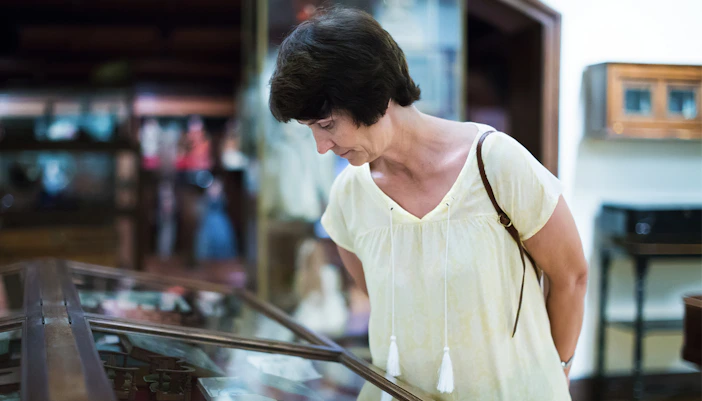
The Second Courtyard gets busier once tour groups and school groups filter in through late morning, especially in spring and summer. Inside the kitchen rooms, that means slower movement around display cases and less space to step back from the objects. Earlier entry gives you a cleaner read of the rooms.

What to prioritize if time is short

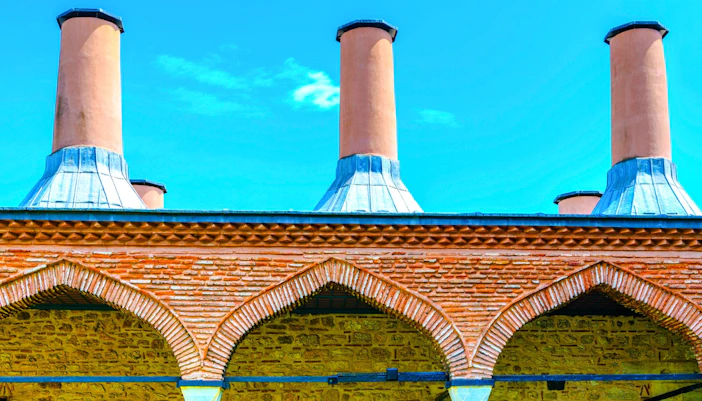
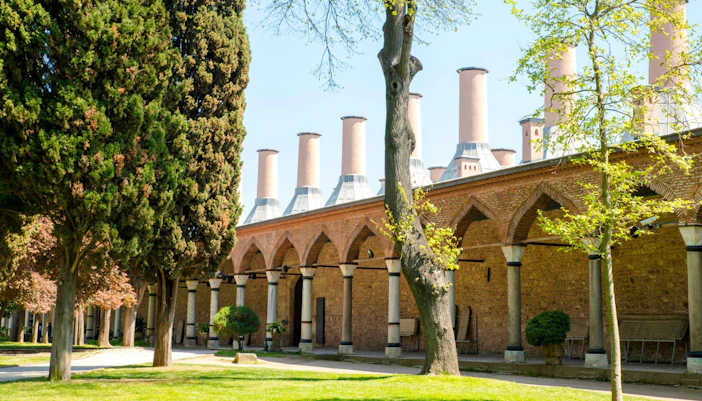
If you only have 10–15 minutes, focus on 3 things: the long line of chimneys above the roofline, the giant copper cooking vessels, and the porcelain collection displayed in the kitchen complex. Those 3 elements explain scale, daily labor, and court dining better than a quick sweep of every room.

Common mistakes to avoid

Most visitors glance at the cases and move on without looking up at the architecture that made mass cooking possible. Another common mistake is postponing the kitchens until after the Harem or Treasury, when energy drops and the palace feels crowded. See them early, and look at the room itself as much as the objects.

Best tickets to experience Topkapi Palace kitchens

Ticket typeWhy choose it

Skip-the-line with audio guide

Reach the kitchens early, move at your own pace, and get context on court life without joining a group.

Guided tour with skip-the-line

Best if you want the kitchens explained as part of the wider palace story, not just viewed as display rooms.

Combo ticket with another landmark

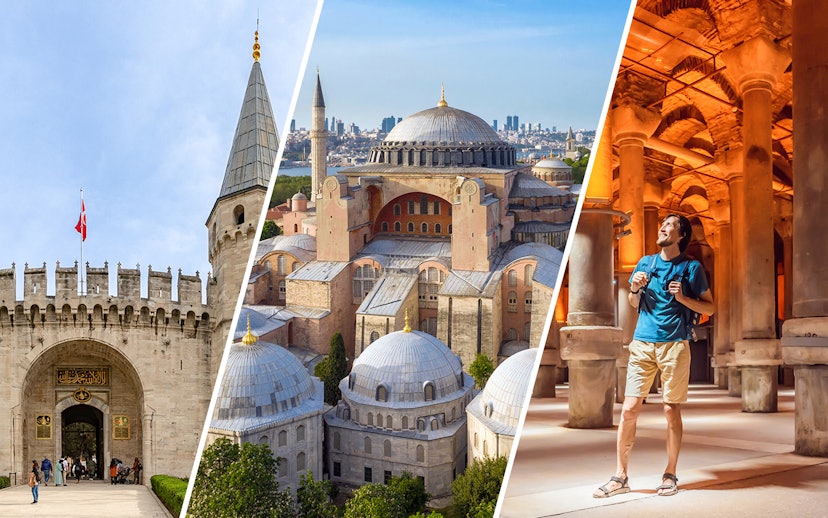
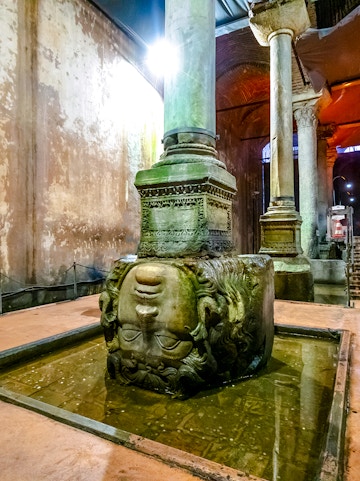
Useful if the kitchens matter to you, but you also want Hagia Sophia or Basilica Cistern in the same day.

Why it’s worth seeing

The kitchens matter because they show how the Ottoman court actually functioned: not as a ceremonial shell, but as a working household fed at scale every day. Most visitors notice the chimneys from the courtyard and move on, missing that this was one of the palace’s largest service zones. Follow the sequence of rooms carefully, and the spaces start to explain power through labor, storage, cooking, and display.

The chimney line and hearth halls

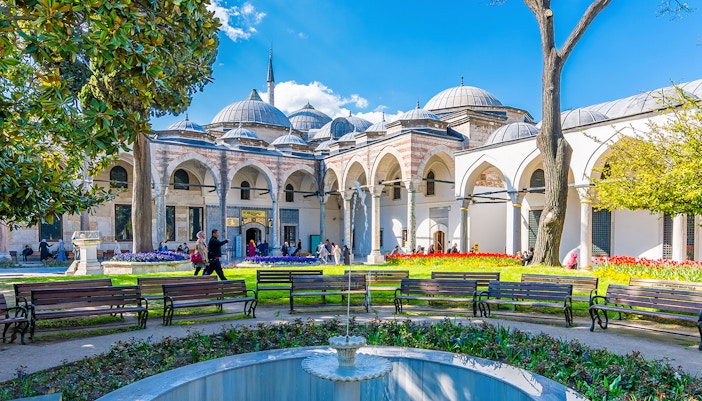
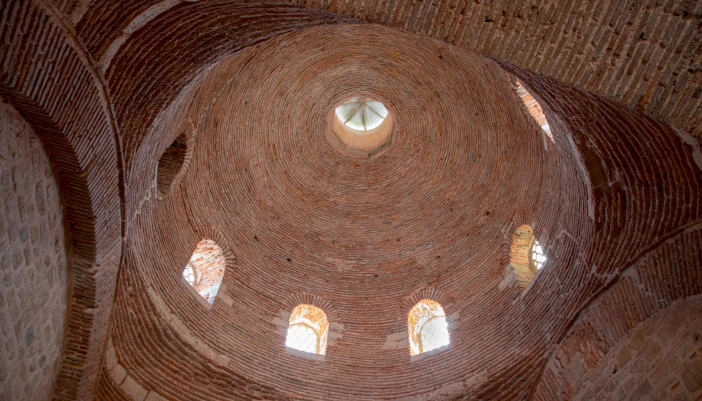
Start from the Second Courtyard side and look up before you enter. The repeated chimneys above the domed roofline tell you immediately that this was not one kitchen, but a large production system. Once inside, the scale of the hearth spaces and cooking equipment helps you read the palace less as a residence and more as a complex that had to feed a court.

The porcelain galleries

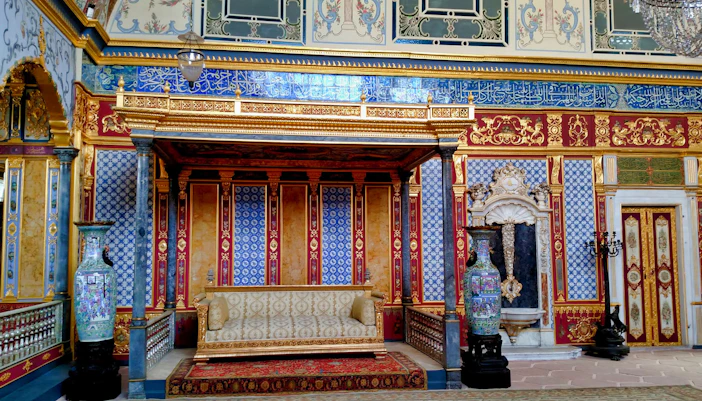
Move next to the porcelain displays inside the kitchen complex rather than treating them as a separate museum stop. These rooms show what the kitchens supplied upward into palace life: not just food, but court ritual, rank, and presentation. Slow down at the Chinese and Japanese pieces, because they explain how global trade and Ottoman status met inside a service building.

The service and storage spaces

Finish with the rooms that feel more functional than decorative. They matter because they show how food, vessels, and labor moved through the palace behind the scenes. If you only look for the most polished objects, you miss the point of the kitchens. These quieter rooms are what make the spectacular collections above them feel operational, not abstract.

Historical & cultural significance

Long before visitors photographed the chimneys, these kitchens fed the sultan, the imperial household, and thousands of palace residents attached to the court. Rebuilt and expanded after the 1574 fire, they became one of the largest service zones in the Topkapi Palace. What began as a working centre of Ottoman court life now functions as a museum space, using the original rooms to display imperial porcelain, utensils, and the material culture of palace ceremony.

Notable figures

Mehmed II | Founder

Made Topkapi the Ottoman seat of rule after the conquest of Constantinople.

Know more

Mimar Sinan | Architect

Associated with rebuilding and reshaping the kitchens after the 1574 palace fire.

Know more

Suleiman the Magnificent | Sultan

His court expanded the palace household and increased the kitchens’ symbolic importance.

Know more

Know before you go

  • Open from 9am to 6pm
  • Last entry into the complex is permitted at 5pm
  • The palace complex is closed to the public every Tuesday.
  • Hours are subject to change on public holidays and state occasions.

Address: Topkapi Palace Museum, Cankurtaran, 34122 Fatih, Istanbul | Find on Maps

  • Nearest tram: Sultanahmet stop on the T1 line, then around a 10-minute walk
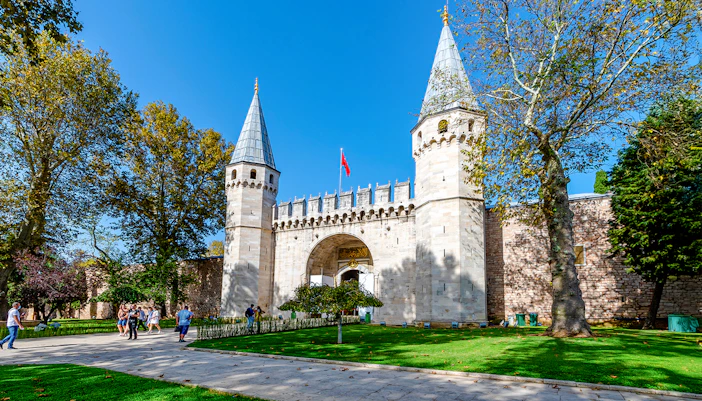
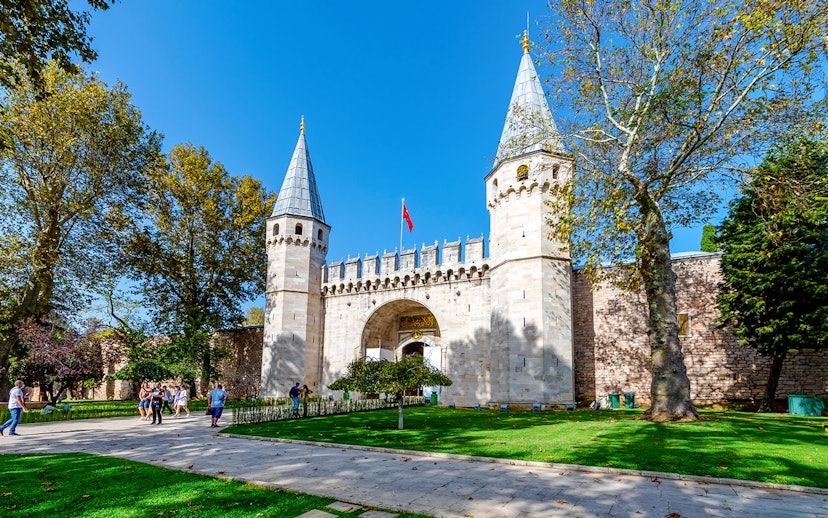
  • Entry point: Enter through the main Topkapi Palace visitor entrance and continue to the Second Courtyard
  • Position in route: The kitchens line the right side of the Second Courtyard and cannot be accessed directly from outside
  • Wheelchair access: Partial across the palace; some sections have steps, thresholds, and uneven stone surfaces
  • Kitchen route: Easier than some deeper palace sections because it is reached early and largely on the main courtyard route
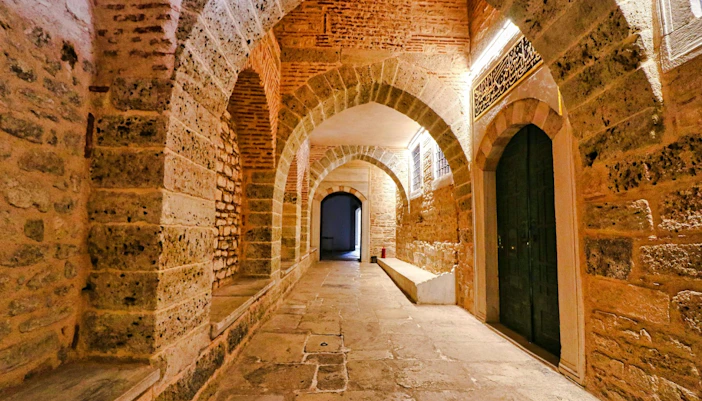
  • Mobility note: Cobblestones, worn paving, and narrow interior transitions can slow wheelchair and stroller movement
  • Audio guide option: Available with select self-guided tickets in multiple languages
  • Physical demand: Expect extended walking across the palace complex and periods of standing
  • Security: All visitors pass through mandatory security screening, even with skip-the-line tickets
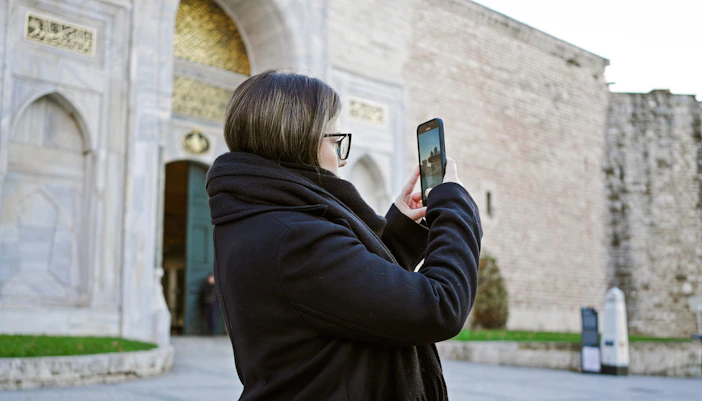
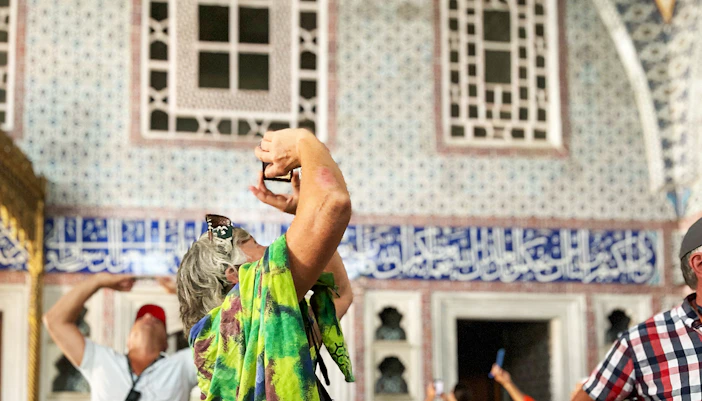
  • Photography: Follow room-by-room signs, as some palace interiors restrict photos
  • Flash and equipment: Flash photography, tripods, and selfie sticks are not allowed inside palace interiors
  • Bags and food: Large bags, backpacks, food, and drinks are restricted in certain palace areas
  • Route rule: Reaching the kitchens requires following the main palace entry sequence through security and ticket control

Frequenlty asked questions about Topkapi Palace kitchens

Yes. Entry to the Topkapi Palace Kitchens is included with every valid Topkapi Palace ticket. No separate ticket exists.

More reads